Foreword
PolymodePolymode wanted a typeface that could speak our language. To carry the energy, range, curiosity, and polymodal nature of our studio, it would need to express a view while navigating neutrality. Where neutrality usually means one way of being, we hoped to counter that with an expansiveness, an openness that welcomes complexity—a pseudo-neutrality that allows space for multiple interpretations, moods, and identities to coexist. No small order. That’s when we reached out to Jesse Ragan and Ben Kiel at XYZ Type.
We didn’t know yet that creating Polymode Sans would become an act of self-expression. Feeling basic today and opulent tomorrow, that’s kinda like us. It has helped us define who we are as a studio of multi-modal thinkers and become a tool for how we want to express ourselves in the world.
The four of us got there through our studio’s Poetic Research process, where we reference everything and the kitchen sink to frame a project’s context. We dig in the archives, we honor marginalized voices, we call to our ancestors, and we channel them, with a divine kiss of queerness. The only catch was that we also had to step into the shoes (alternating between four-inch stilettos, sneakers, flip-flops, and sandals) of “the client” for Ben and Jesse, and for our studio writ large, as it was still forming its collective self-identity—which continues to evolve. It was so satisfying to see our typeface come to life in projects for artists like Fred Eversley, Amanda Williams, and Paul Mpagi Sepuya; for clients ranging from Letterform Archive to the Art Gallery of Ontario; and on our first fully fleshed-out website.
The real surprise was how expansive it became. What started as a tool for our own voice quickly evolved into an intuitive and generative system for others through its public release. Together, we created a variable, adaptive system that invites new forms of expression. Polymode Sans has opened up a new typographic space for us, one that bridges our studio’s diverse practices and amplifies the variety of our clients’ voices. More than a typeface, it’s a living framework that continues to evolve and create space for others to find their own expression—like Type Electives, which uses it to help shape a more inclusive and equitable type and design world through education.
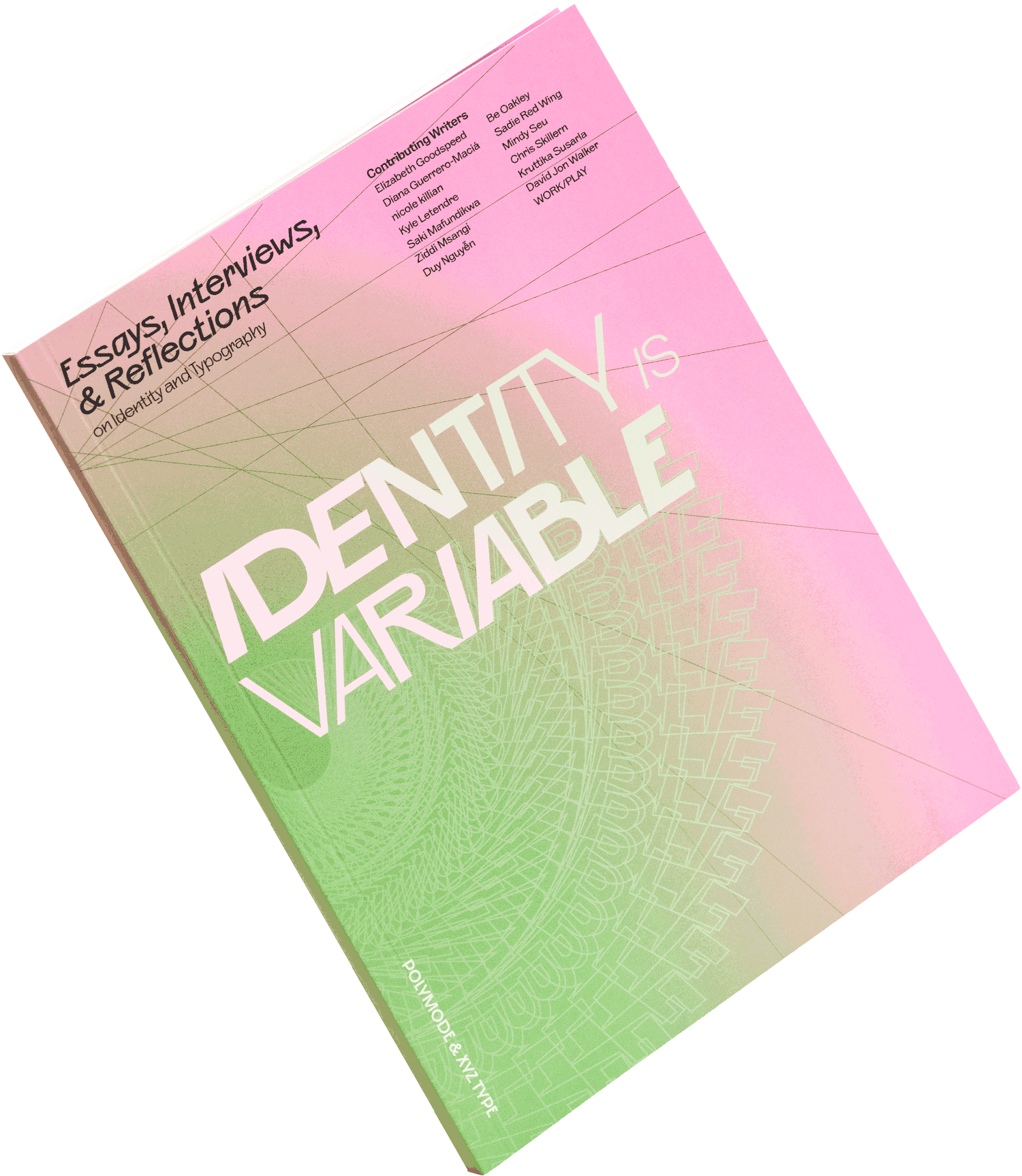
The same spirit of curiosity that shaped Polymode Sans extends to the essays curated in this book. As true collaborations go, we wouldn’t be here without XYZ Type and, further, all the contributors whose voices and perspectives have made this collection possible. Our deepest thanks to Elizabeth Goodspeed, Diana Guerrero-Maciá, nicole killian, Kyle Letendre, Saki Mafundikwa, Ziddi Msangi, Duy Nguyễn, Be Oakley, Sadie Red Wing, Mindy Seu, Chris Skillern, Kruttika Susarla, David Jon Walker, and WORK/PLAY for lending their insight, imagination, and care—this book is a collective expression made possible by their generosity. The authors gathered here reflect an expansive ethos. We chose these writers because each offers a different perspective on what typography can hold. Together, their essays form a plurality of voices that reconsiders how type shapes us and how we, in turn, shape type. There certainly is room here for everyone, so come play with us.